




What Evidence Do You Need to Prove a Slip and Fall Injury Claim?
Discover the key evidence needed to prove a slip and fall claim, how to document your case, and how negligence impacts your compensation.

Our Network of Attorneys Are Recognized by the Best
GetCompensation.LAW explains that one of the most critical elements in any slip and fall case is evidence. Without strong and well-documented proof, even valid claims can be denied or undervalued. While many accidents happen quickly, the process of proving what caused them requires careful attention to detail and immediate action.
Victims often assume that their injuries alone are enough to justify compensation. However, in legal terms, it is not just about being injured—it is about proving that the injury was caused by negligence and that the responsible party failed to maintain safe conditions.
Understanding what evidence is required can make the difference between a successful claim and a denied one.
Why Evidence Is Essential in Slip and Fall Cases
Slip and fall accidents often occur without witnesses or clear documentation at the moment they happen. This makes evidence crucial for reconstructing the event and establishing liability.
Insurance companies and property owners frequently challenge claims by arguing that:
- The hazard did not exist
- The hazard was not dangerous
- The victim caused the accident
- The injury is unrelated to the fall
Strong evidence helps counter these arguments by providing objective proof of what occurred.
This is why understanding navigating slip and fall claims expert help from GetCompensation.LAW is so valuable, as building a case requires more than just a personal account of the incident.
Photographic and Video Evidence
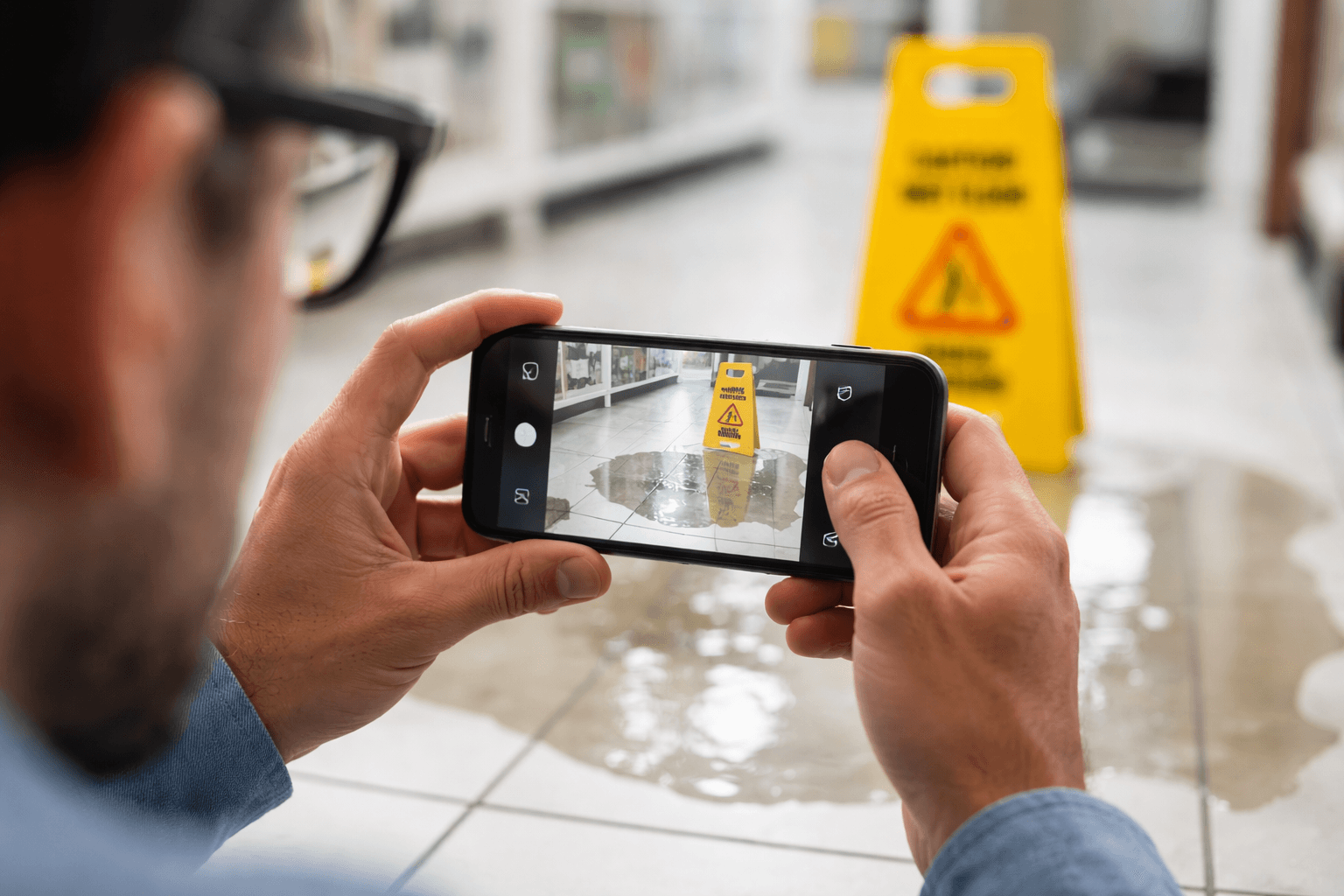
One of the most powerful forms of evidence in a slip and fall case is visual documentation. Photos and videos can capture the exact conditions that led to the accident.
Important details to document include:
- The hazard itself (wet floor, broken surface, debris)
- The surrounding environment
- Lack of warning signs
- Lighting conditions
- Foot traffic in the area
If possible, victims should take photos immediately after the accident. Conditions can change quickly, and hazards may be removed or repaired soon after an incident is reported.
Visual evidence can clearly demonstrate how property owner negligence contributed to unsafe conditions.
Medical Records and Injury Documentation
Medical records are essential for linking the accident to the injuries sustained. These documents provide professional confirmation of the harm caused and the treatment required.
They may include:
- Emergency room reports
- Doctor’s evaluations
- Imaging results (X-rays, MRIs)
- Treatment plans and prescriptions
- Physical therapy records
The severity of injuries plays a major role in determining compensation. Understanding the most common injuries in slip and fall accidents helps illustrate how these incidents can lead to serious, long-term consequences.
Prompt medical attention also strengthens a claim by establishing a clear timeline between the accident and the injury.
Incident Reports and Official Documentation
After a slip and fall accident, it is important to report the incident to the property owner, manager, or business operator.
An incident report may include:
- The date and time of the accident
- Location details
- Description of what happened
- Statements from staff or witnesses
Requesting a copy of this report can be extremely valuable. It creates an official record that confirms the incident occurred and may include admissions or observations from the property owner.
Witness Statements
Witnesses can provide independent accounts of what happened, which can strengthen a claim significantly.
They may confirm:
- The presence of a hazard
- How long the hazard existed
- The absence of warning signs
- The circumstances of the fall
Witness statements can be particularly helpful when liability is disputed.
Even brief statements from other customers, employees, or bystanders can support a victim’s version of events.
Surveillance Footage
Many businesses and public spaces are equipped with security cameras. Surveillance footage can provide clear and unbiased evidence of the accident.
This type of evidence may show:
- The exact moment of the fall
- The condition of the area beforehand
- How long the hazard was present
- Staff response after the incident
Because surveillance footage is often deleted or overwritten after a short period, it is important to request access as soon as possible.
Proving Negligence Through Evidence
Collecting evidence is not just about showing that an accident occurred—it is about proving negligence.
To establish liability, evidence must demonstrate that:
- A hazardous condition existed
- The responsible party knew or should have known about it
- The hazard was not addressed in a reasonable timeframe
- The hazard directly caused the injury
Understanding and overcoming slip and fall accidents helps highlight how preventable many of these incidents are when proper care is taken.
Strong evidence connects all these elements and builds a clear narrative of responsibility.
Common Mistakes That Can Weaken a Case
Many slip and fall claims are weakened by avoidable mistakes. Victims may unintentionally harm their case by failing to collect or preserve key evidence.
Common mistakes include:
- Not taking photos of the scene
- Delaying medical treatment
- Failing to report the incident
- Not gathering witness information
- Posting details about the accident on social media
These actions can create gaps in evidence that make it easier for insurance companies to deny or reduce claims.
How Legal Support Strengthens Evidence Collection
Because evidence is so critical, many victims benefit from professional guidance when building their case.
Legal support can help:
- Identify what evidence is needed
- Preserve time-sensitive documentation
- Obtain surveillance footage
- Work with medical experts
- Build a strong legal argument
Understanding navigating slip and fall claims expert help from GetCompensation.LAW can provide valuable insight into how experienced professionals approach these cases.
Having the right support can significantly improve the chances of a successful outcome.
Why Acting Quickly Makes a Difference
Time is one of the most important factors in collecting evidence. The longer a victim waits, the greater the risk that critical information will be lost.
Hazards may be repaired, surveillance footage may be deleted, and witnesses may become harder to locate.
Taking immediate action helps preserve the integrity of the case and ensures that all relevant details are documented.
Final Thoughts on Slip and Fall Evidence
Slip and fall claims depend heavily on the strength of the evidence presented. Without proper documentation, it becomes difficult to prove liability and secure fair compensation.
By collecting photos, medical records, witness statements, and official reports, victims can build a strong foundation for their claim.
Understanding how negligence plays a role—and how to prove it—can empower individuals to take the necessary steps toward justice.
GetCompensation.LAW emphasizes that evidence is the key to holding property owners accountable. With the right approach and timely action, victims can protect their rights and pursue the compensation they deserve.